Welcome to Jigme Singye Wangchuck National Park, also known as the Black Forest Mountain, a pristine sanctuary boasting expansive natural ecosystems and vast altitudinal ranges that contribute to exceptionally high biodiversity. Unique among global national parks, JSWNP is home not only to rich wildlife but also to culturally vibrant agricultural villages, accessible via the six-day low-altitude Nabji-Korphu Trail. Strategically divided into core, buffer, and multiple-use zones, the park aims to balance wildlife conservation with community livelihood, allowing tourism within the multiple-use zone. The trek ranges between 693m (2,310ft) and 1,636m (5,453ft) across six villages, offering opportunities to spot the rare Golden Langur, found only in Bhutan and Assam, as well as the endangered Rufous-necked Hornbill. Known for excellent birding and diverse Himalayan flora, the trail also carries deep cultural significance, including a commemorative pillar at Nabji Temple symbolizing peace negotiated in the 8th century by Guru Rinpoche between two local kings. The first two days take you through the homeland of the Monpa people—believed to be Bhutan’s earliest settlers—who practice a blend of animistic shamanism and Buddhism. Traditionally hunters and gatherers, the Monpas are skilled cane weavers and bamboo crafters whose practices are closely connected to the surrounding forest. By promoting community-based tourism, the Nabji-Korphu Trail helps support park conservation efforts while generating environmental awareness and socio-economic benefits for local communities.

EXCLUSIVE JOURNEY
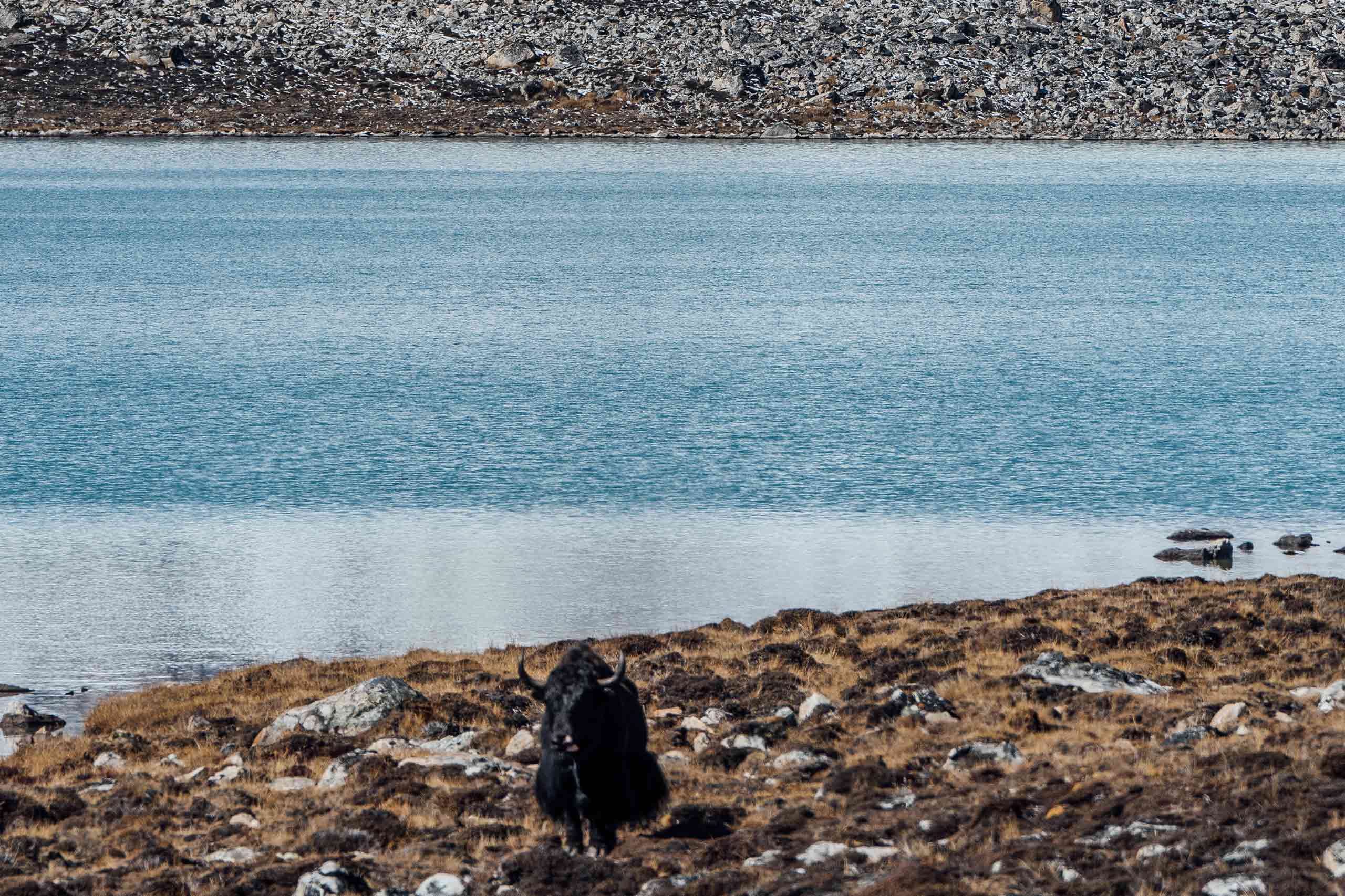
SPECIALIZED ADVENTURE
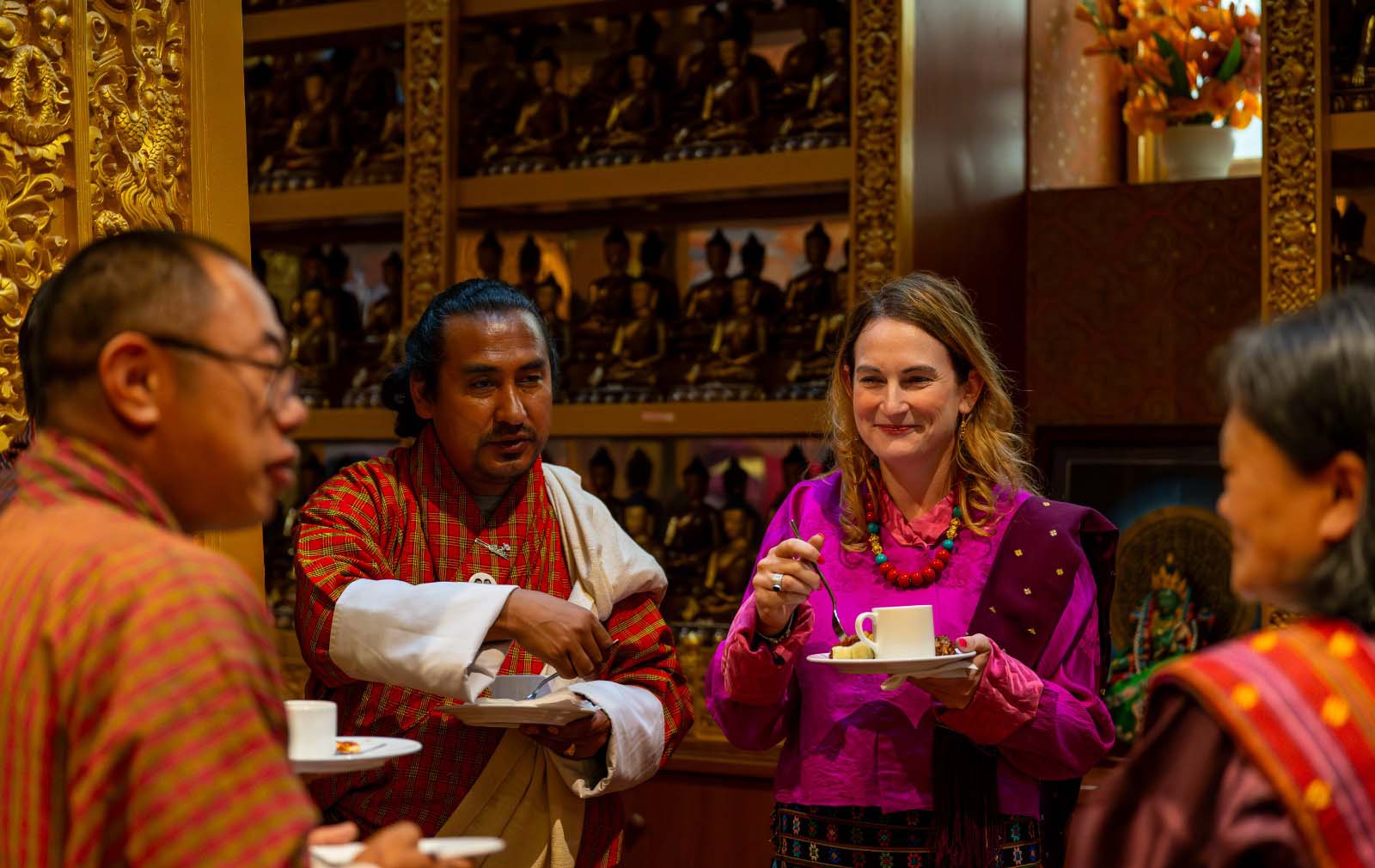
CULTURAL IMMERSION

NOMAD LIFESTYLE
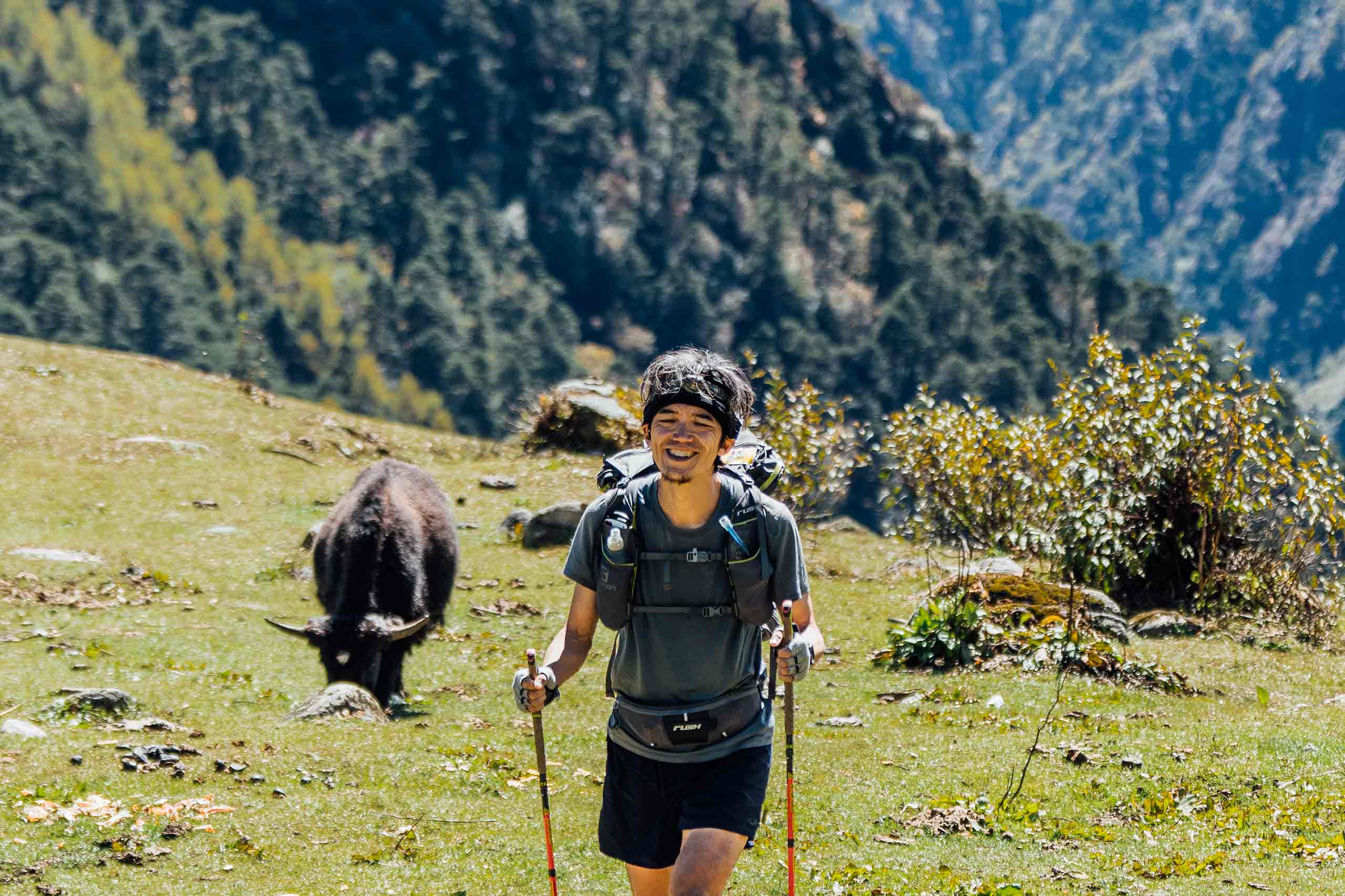
NATURE ESCAPE
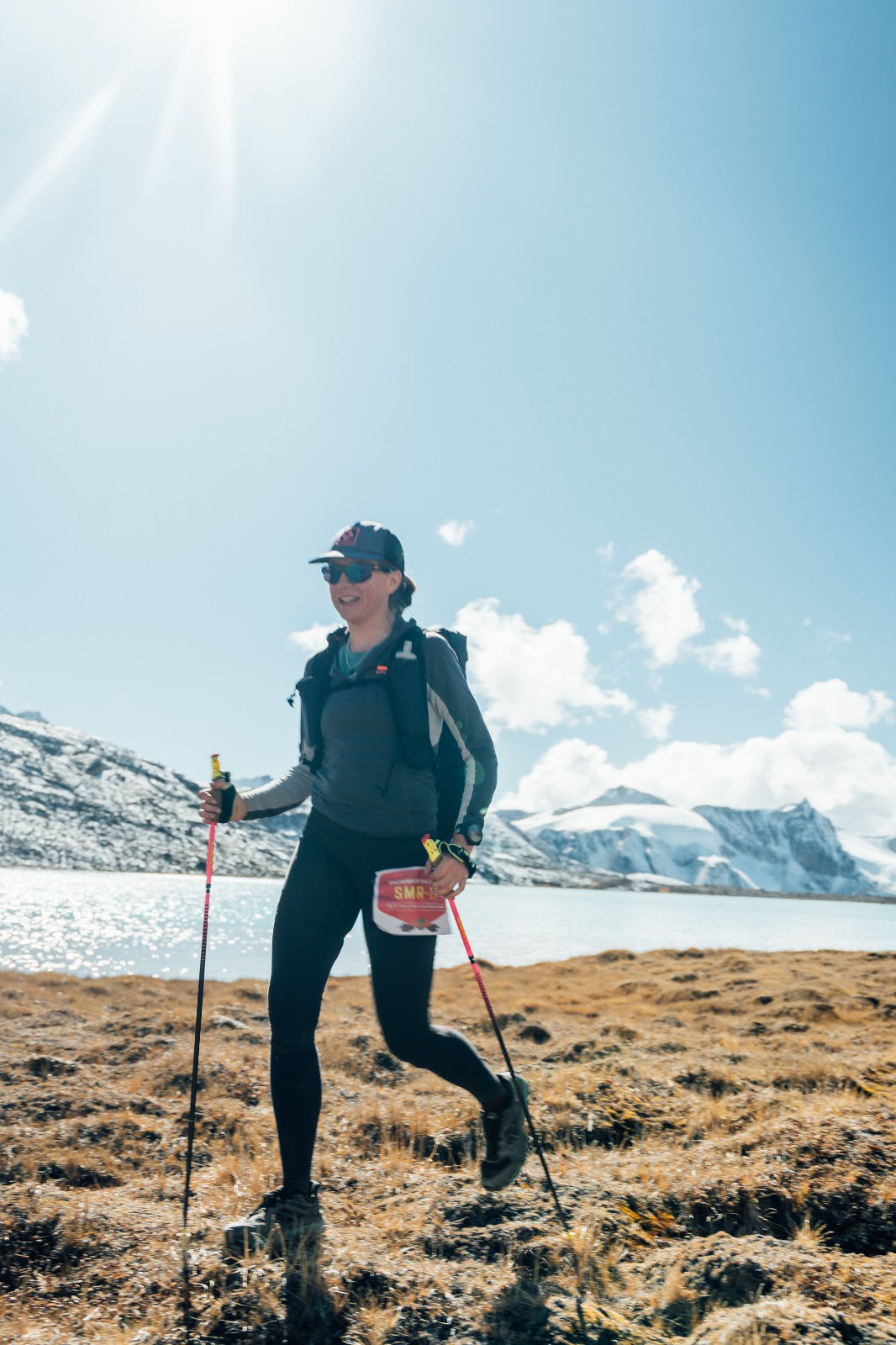
PHOTOGRAPHER’S DREAM

BIRDING EXPEDITION

FAM TRIP OPPORTUNITY
Sustainable Development Fee to the Government of Bhutan which goes towards the development of schools, hospitals, etc.
Bhutan Visa
All Meals (Breakfast, Lunch & Dinner)
Certified English Speaking Bhutanese Guide
All ground transportation
All internal taxes and charges including Entry Fees
Mineral Water while traveling
Accommodations in 3-star properties (Can be upgraded to 4 & 5-star with additional Premium)
Complimentary from company
Traditional Hot Stone Bath
Experience the breathtaking views of the high Himalayan peaks as you fly into Paro valley (2,200 meters) where you can get the first glimpse of this magical country. After the visa formalities at Paro airport, meet your personal guide and driver.
On the way, stop at Tachog Lhakhang (the Iron Chain Bridge), a temple located across the famous iron chain bridge built over the meandering Pa Chhu (Paro River). Devour yourself to the invigorating ambience of the cool-sweeping breeze and bright colored prayer flags. The whole set up a feast to the eye.
Upon arriving at Thimphu (2,300 meters), check in your hotel and freshen up before visiting the exquisite massive structure of Thimphu Tashichho Dzong- a master piece of Bhutanese architecture.Visit the local archery ground where the locals celebrate the national sport with dance and song with every hit.
Take a stroll in the evening around Thimphu town and absorb the magical atmosphere of the capital city while capturing the sight of contemporary Bhutanese life.
Overnight at a hotel in Thimphu.
In the morning your guide and vehicle will come to pick you up from the hotel and proceed for sightseeing.
Buddha Dordenma: Capture the vibrant Buddha Dordenma statue in the early morning sunrise. Apart from the serenity of the place the view of the Thimphu city from this mountain is gorgeous.
On the way break at DochuLa- Pass at 3,100 meters. Sip a cup hot coffee at the DochuLa cafeteria while enjoying the mesmerizing panoramic view of the Himalayan ranges.
On arriving Punakha; walk along the path through the traditional houses of Yuwakha village amidst agricultural fields of rice and mustard, leading to a hillock where the temple of the Divine Mad monk is located.
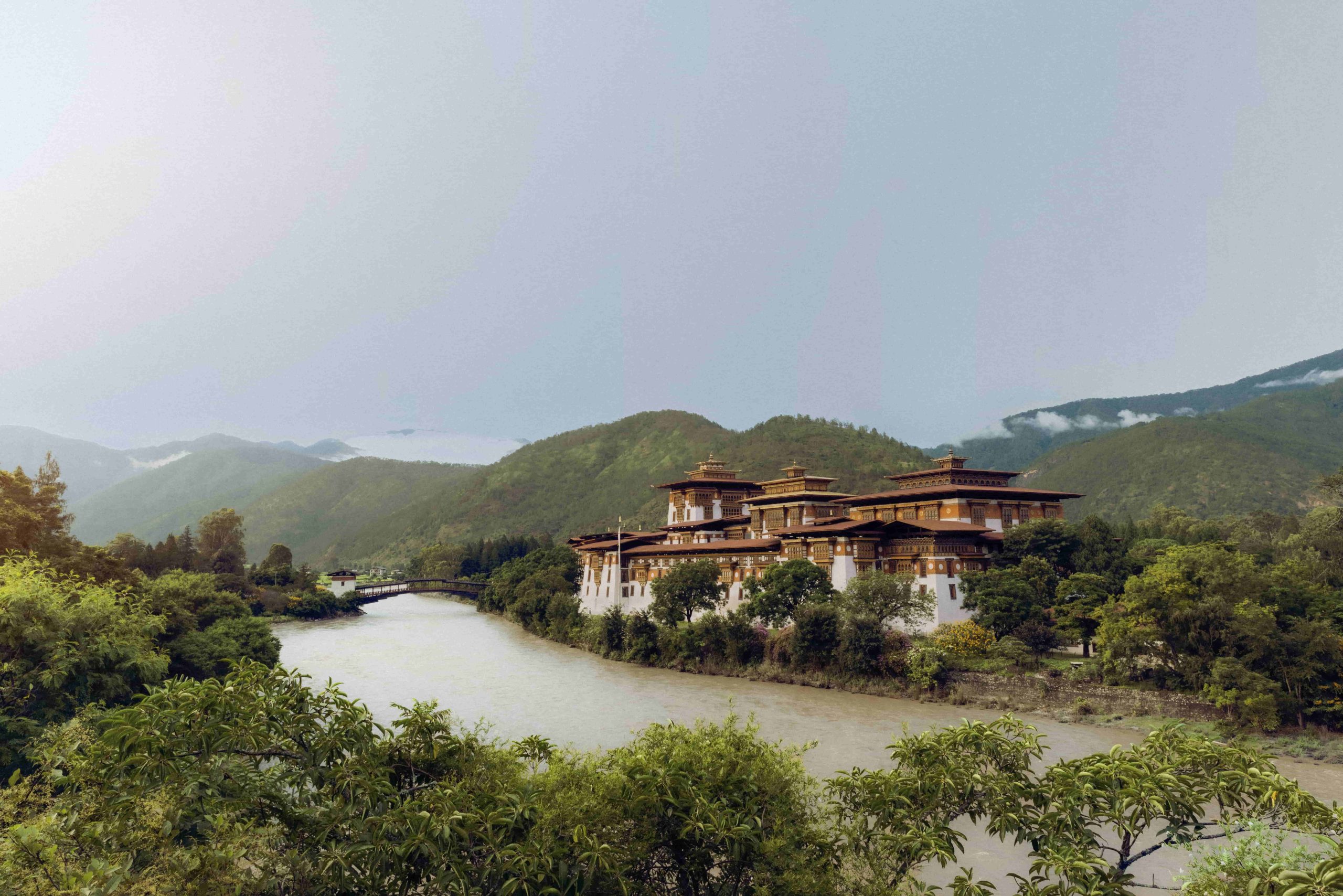
Later visit Punakha Dzong which is just as striking inside as outside and it is arguably the most beautiful Dzong in Bhutan.
If you like some adventure then you can try out river rafting or we can pay a short visit to Wolokha Nunnery perched on the hill top.
Overnight at hotel in Punakha
Drive approximately 4.5 hours to Trongsa, the gateway to central Bhutan at 2180 meters. Set amidst spectacular scenery, Trongsa Dzong, the ancestral home of Bhutan’s royal family, commands the eye from miles away. We can also visit Ta Dzong, the museum in the watchtower dedicated to the Wangchuk dynasty, which tells the stories of the Dzong and the valley it has watched over for centuries and features personal belongings of the Kings and Queens of Bhutan.
Overnight at hotel in Trongsa
After furnishing yourself with ample information about the trek from the information booth at the Park Range offi ce in Tongtongfey, the Jangbi village guide steers you down to the Mangdi river where you cross a suspension bridge. The fi rst day brings you in contact with the Monpas who are believed to be the fi rst inhabitants of Bhutan. A glimpse on their lifestyle further validates their ethnicity, coupled by mythical legends about their origins. The campsite in Jangbi stands on the valley sill, which offers a beautiful view of the Mangdi valley.
The morning allows you to further interact with the Monpas. Before you proceed, you could pay a visit to the orchid garden for your indulgence in botanical photography. The hike to Kudra provides a touch of jovial atmosphere because this part of the trail meanders along stone imprints of Guru Rinpoche’s footprints, dagger and phallus, festooned by stories that support Guru’s activities. Lunch is served just before you reach Ugyendra, a steep cliff below Phrumzur, one of the few villages of the Monpa communities scattered around the trail. With renewed energy from lunch, you could visit the village lhakhang and then proceed to the campsite in Kudra.
You could wake up with the distant call of the Rufous-necked hornbill. This part of the trek is an assortment of streams, waterfalls, and thick forests that will give you an invigorating feeling of being out in the wild. The Great Himalayan Squirrel, Rhesus Macaques, and small snakes are often spotted along the trail. Unseen but present, are Himalayan black bears, Red pandas, tigers, Clouded leopards, and many more. Upon arrival at the holy tree in Nabji, the people will give you a heartwarming reception. Nabji is a beautiful village with endless paddy fields demarcating the valley and surrounding the campsite.
In route to Korphu, the Nabji temple is located in the middle of the paddy fields. Inside, there remains a stone pillar on which Guru Rinpoche, while traveling through Bhutan in the 8th century, brought consensus between two warring kings by imprinting their thumbs on each side of the stone. Korphu is situated on a mountaintop at an altitude of 1,500m. The most striking thing about Korphu is that the people exemplify hospitality almost treating you like ‘A King on accession to throne’. You have the option of being welcomed with a traditional ‘Chipdrel’ procession and a ‘Marchang’ ceremony, singing traditional songs of praise and wellbeing for new visitors. They also perform the traditional ‘Tashi Labey’ dance to bid you farewell. If you are interested, you can participate in the quintessential Bhutanese games of ‘Khuru’, ‘Dego’, ‘Sok-sum’, and ‘Gee-dum’, all on the brink of fading away. You could also pay a visit to the village temple that houses the sacred relics of Pema Lingpa, the famous ‘Treasure revealer’ of Bhutan. The village campsite provides a spectacular bird’s-eye view of Nabji and surrounding areas.
The hike from Korphu to Nyimshong is pleasant and arguably the best birding spot which can boast a bird list of more than 395 species, among others the elusive Rufous Necked Hornbill which has its nesting holes adjacent to the trail. The walk is mixed with waterfalls and, streams and cantilever bridges. The evening brings you to Nyimshong, a village with its reticent architecture and lifestyle. The women of Nyimshong have a fondness for singing and dancing and a cultural show would be ideal to express certain euphoria to end your trek. Of course this is optional.
If you are lucky, the Golden langurs will lead you to the exit. You descend down to the Mangdi river again to see some herons and River-lapwings. An hour’s steep ascend to the road and your driver will drive you back to Trongsa
Drive from Trongsa to Phobjikha valley.
Enjoy the views of the immense and remote Phobjikha valley and the black mountain ranges. In the late afternoon, you may like to take the short Gangtey Nature Trail walk (1.5 hours approximately) from Gangtey Gompa through the outskirts of Phobjikha valley. This is the site where black-necked cranes visit in hundreds in November each year after spending the summer in Tibet.
Overnight: Hotel in Gangtey
Today we return to Paro, a drive of approximately 7 hours, via Wangdue. Wangdue (also known as Wangdue Phodrang) was originally considered Bhutan’s secondary capital and it commands an important central position.
After checking in the hotel in Paro, visit traditional farmhouses surrounded by paddy fields, vegetable gardens, and farm animals will give you an insight into how Bhutanese people live.
Later enjoy a hot stone bath in a wooden tub, get some cooking tips, and help in preparing the dinner which you will get to eat in the traditional Bhutanese style with the whole family.
Later after returning to the hotel we will sort out our luggage for the Bumdra trek. Anything you don’t need will be kept safely in Paro to await your return.
Overnight: Hotel in Paro
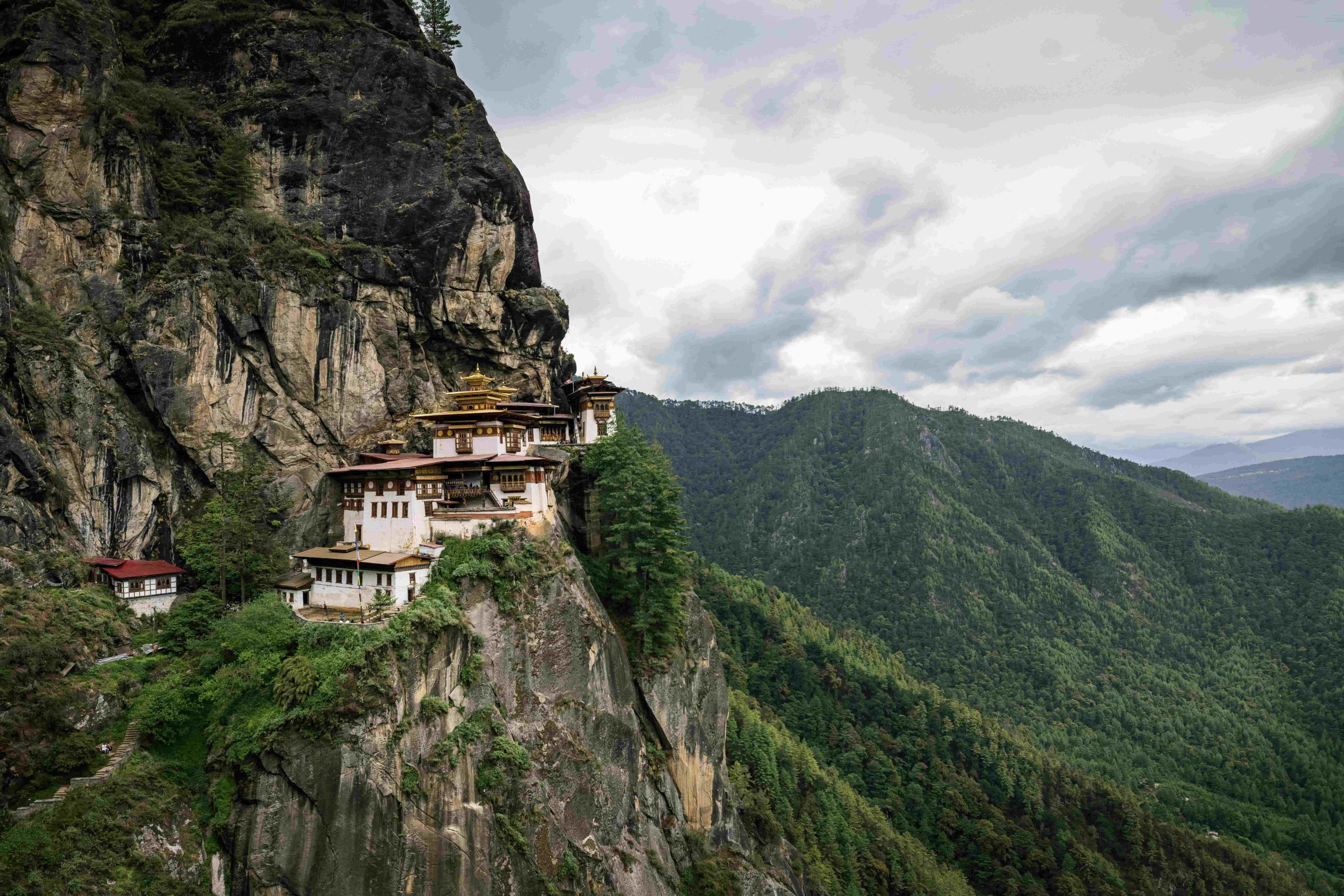
Get your energy up at breakfast this morning to hike up to the iconic Taktsang Monastery. Venture through the pristine surroundings of the Tiger’s Nest monastery. Be rewarded to an overwhelming sight monastery resting on edge of a cliff at 900 meters above Paro valley.
Tigers Nest Monastery or Taktsang Goemba is one of the holiest and the most beautiful sites of Bhutan and acquires its name from the legend of its foundation, when in the 8th Century Guru Rinpoche, widely revered as the second Buddha, arrived at this place from Tibet flying across the mountains on the back of a tigress and blessed the entire place.
On your way back visit the Kichu monastery. It is the one of the oldest and the first ever Buddhist monastery to be built in Bhutan. It was built in the 8th century
Overnight at hotel in Paro
Farewell

Travel Insurance
Any Expenses of Personal Nature
Tips for the guide and driver
Our expert team is dedicated to turning your travel dreams into reality. We offer personalized itineraries, luxury accommodations, and unique experiences that cater to all types of travelers.
Package cost: USD 3400 per person on double sharing basis.
Single Room Supplement: USD 40 per person per night.
STORIES FROM OUR GUESTS